

Code 128 vs. Data Matrix: Choosing the Right Barcode Format for Inventory Management
Choosing the right barcode format is a foundational decision in supply chain and inventory management. Both Code 128 and Data Matrix are industry standards, but they serve different operational environments, storage requirements, and scanning infrastructures.
Quick Comparison
| Feature | Code 128 | Data Matrix |
| Type: | 1D (Linear Barcode) | 2D (Matrix Barcode) |
| Data Capacity: | High for 1D (Up to 128 alphanumeric characters) | Extreme (Up to 2,335 alphanumeric / 3,116 numeric) |
| Physical Footprint: | Scales horizontally with data length | Very compact; maintains small footprint |
| Scanner Compatibility: | 1D Laser scanners, CCD, and 2D Imagers | 2D Imagers and Camera-based scanners only |
| Damage Tolerance: | Low (No built-in error correction) | High (Reed-Solomon error correction restores up to 30% damage) |
| Primary Use Cases: | Outer carton labeling, shipping containers, pallets | Small parts, electronic components, medical devices, direct part marking (DPM) |
1. Code 128: The Workhorse of Secondary Packaging
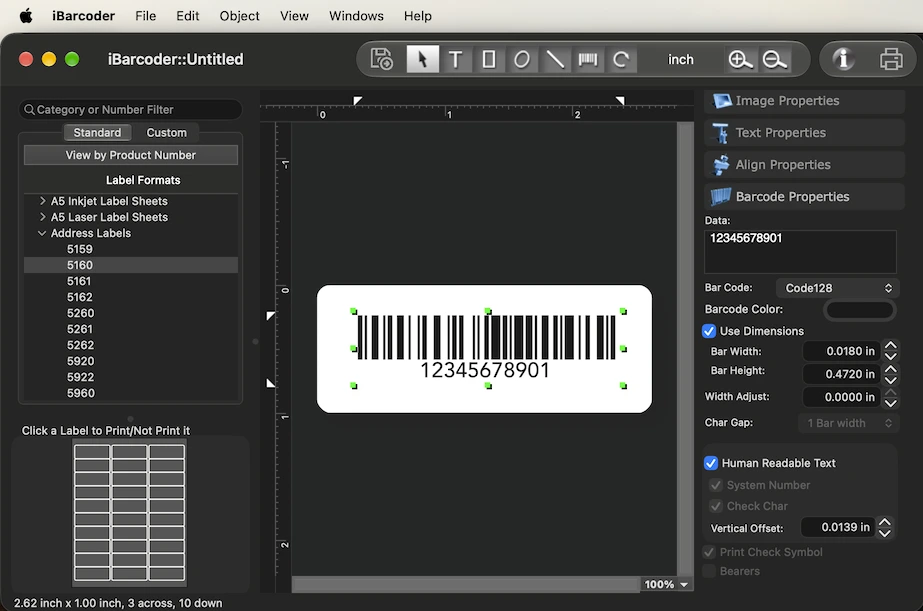
Core Strengths
- • Universal Scanner Support: Scannable by standard 1D laser scanners, which are widespread and lower-cost across logistics environments.
- • Standardized Logistics Formats: The base format for major shipping standards like the GS1-128 (used for SSCC pallet tags, batch numbers, and expiration dates).
- • High Read Speed: Scans rapidly when aligned linearly in fast-moving conveyor systems.
Limitations
- • Size Constraints: As encoded data increases, the barcode grows wider, requiring larger label space.
- • Susceptibility to Damage: A single vertical scratch across all bars can render the barcode unreadable.
2. Data Matrix: The High-Density, Space-Saving Standard
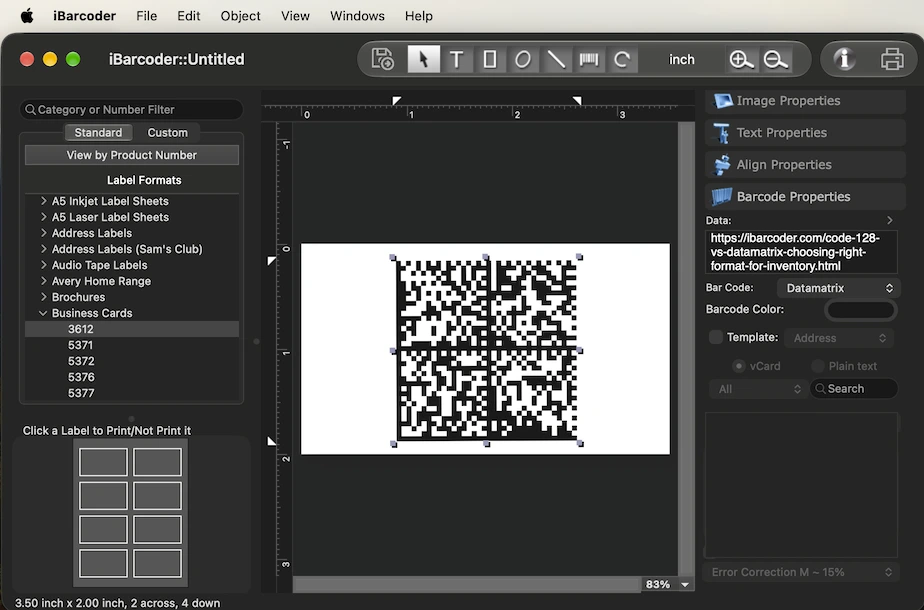
Core Strengths
- • Extreme Data Density: Stores large amounts of information—such as batch numbers, serial numbers, manufacture dates, and URLs - in a space as small as 2x2 millimeters.
- • Built-in Error Correction (ECC 200): Utilizes Reed-Solomon algorithms to restore and decode data even if up to 30% of the symbol is obscured, torn, or damaged.
- • Direct Part Marking (DPM): Can be laser-etched, dot-peened, or inkjet-printed directly onto metal, plastic, or silicon surfaces.
Limitations
- • Hardware Requirement: Cannot be read by traditional 1D line-laser scanners; requires camera-based 2D area imagers.
- • Printing Precision: Demands higher printer resolution (DPI) to cleanly render small grid modules.
Decision Matrix: How to Choose
Choose Code 128 if:
- • Your workflow relies primarily on existing 1D laser scanning equipment.
- • You are labeling outer master cartons, corrugated boxes, or shipping pallets using GS1-128 standards.
- • The physical size of the label is not restricted.
Choose Data Matrix if:
- • Item-level tracking requires encoding detailed information (serial numbers, expiration dates, lot numbers) on very small items.
- • Labels are subject to harsh environments where wear, tear, or exposure to liquids is likely.
- • You need to mark parts directly on the surface (DPM) during manufacturing or assembly.
- • Your scanning infrastructure uses modern 2D area imagers or mobile camera devices.